Honoré Charles Reille
Count of the Empire
Pronunciation:
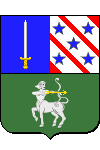
Like many officers of his generation, Honoré-Charles-Michel-Joseph Reille owed his meteoric rise to the wars of the French Revolution and the First Empire. At thirty-one, he was already a divisional general and aide-de-camp to the Emperor; at thirty-four, he commanded an army in Spain; at thirty-nine, he led an army corps at Waterloo. He was less than forty years old when Napoleon fell.
Reille was born in Antibes , on September 1, 1775, into a middle-class family. His father, Esprit-Joseph Reille, was a councilor to the king, lieutenant of the royal court in Antibes, and subdelegate of the intendant. Young Honoré joined the National Guard of his city in 1789, where he received his first military training.
However, it was only by enlisting as a grenadier in the 1st Volunteer Battalion of the Var on October 1, 1791, that he truly entered military service. He was just sixteen years old. The following year, he transferred to the 94th Infantry Regiment, served in the army of Charles François Dumouriez, and participated in the campaigns in Belgium. His conduct at the Battle of Neerwinden on March 18, 1793, earned him the rank of lieutenant.
He was then sent to Toulon, where he met General André Masséna, whose he became aide-de-camp. This relationship would play a crucial role in both his military career and his private life. Reille followed his superior to the Army of Italy and participated in the battles Montenotte, Dego, Lodi, Arcole et Rivoli
Appointed captain in 1796, then squadron leader, his duties took him less often to the field than to headquarters. He proved himself a trustworthy officer, capable of transmitting orders, reconnoitering terrain, and demonstrating initiative.
In 1799 , he was promoted to adjutant general and continued to serve alongside Masséna in the Army of Helvetia. During the Second Battle of Zurich, on September 25 and 26, he temporarily replaced the wounded Nicolas Oudinot at the head of his troops.
In the spring of 1800, he accomplished a remarkable feat: delivering the First Consul's instructions to Masséna, besieged in Genoa. He managed to enter the city despite the blockade established by the Austrians on the landward side and by the British on the seaward side. He then remained there until the French evacuated the city.
After a short stay in France, he returned to Italy during the summer of 1800 to participate in Joachim Murat's expedition to the Kingdom of Naples.
Reille was promoted to brigadier general on August 29, 1803, and given command of a brigade at the Boulogne camp. Napoleon demonstrated the confidence he placed in him by employing him on several observation missions in Bavaria, Austria, and Italy.
In 1805, Reille was assigned to the troops embarked on the fleet of Pierre Charles de Villeneuve. He participated in the naval battle of Cape Finisterre before leaving the squadron and joining the Grande Armée.
He distinguished himself during the campaigns of 1806 and 1807 against Prussia and Russia. At Saalfeld, Jena, and Pułtusk, he commanded a brigade in Jean Lannes'corps. His conduct earned him promotion to major general on December 30, 1806.
He then headed Marshal Lannes'staff until Napoleon I chose him as aide-de-camp after the Battle of Ostrołęka (May 13, 1807). It was in this capacity that Reille participated in the Battle of Friedland.
In 1808, he was created Count of the Empire and sent as Extraordinary Commissioner to Tuscany before returning to Spain. He served in Catalonia where he relieved the fortress of Figueres and led the siege of Roses, which capitulated on December 5.
Recalled for the Austrian campaign in 1809, he fought at Aspern-Essling and Wagram, where he commanded a formation of the Young Guard tasked with supporting the great battery of Jacques Alexandre Law de Lauriston.
After a stay in Zeeland, he returned to the Iberian Peninsula as military governor of Navarre in May 1810. There he led a grueling struggle against the guerrillas, notably those of Francisco Espoz y Mina.
Reille then reinforced Louis-Gabriel Suchet in front of Valencia and contributed to the capture of the city in January 1812. After a command in Aragon, he received that of the French army in Portugal.
At Vitoria, on June 21, 1813, he commanded the right wing of King Joseph Bonaparte's army. Reille then continued to fight under Marshal Jean-de-Dieu Soult during operations in the Pyrenees, and later on the Bidassoa, Nivelle, and Nive rivers. In 1814, he participated in the battles of Orthez and Toulouse.
After Napoleon's first abdication, Reille rallied to Louis XVIII who appointed him Inspector General of Infantry, Knight of Saint Louis, and then Grand Cross of the Legion of Honour. On September 12, 1814, Reille married Victoire-Thècle Masséna, daughter of the Marshal.
Upon Napoleon's return in March 1815, Reille resumed service with the Emperor. Placed at the head of the II Corps of the Army of the North, he fought under the orders of Marshal Michel Ney at Quatre-Bras on June 16.
Two days later, at Waterloo, his body occupied the French left wing. The planned attack to pin down the Hougoumont farm [50.67060, 4.39465] turns into a bloody and prolonged struggle. Reille's divisions are largely engaged in successive assaults, without success. Reille has two wounded horses under him during the fighting. After the defeat, he leads the remnants of his troops back south of the Loire.
Placed on half-pay during the Second Restoration, Reille suffered only temporary ostracism. Louis XVIII appointed him a peer of France on March 5, 1819, then a gentleman of the king's chamber.
After 1830, Reille swore allegiance to Louis-Philippe, King of the French, and held various positions within the army's high councils. On September 17, 1847, the king elevated him to the rank of Marshal of France. In 1852, Napoleon III appointed him a senator of the Second Empire. Reille retained this office until his death.
He died in Paris on March 4, 1860. He is buried in Père-Lachaise Cemetery, division 28, in the tomb of his stepfather, André Masséna .
"Honoré Reille". Painted by Charles Philippe Auguste Larivière (1798 - 1876)

General Moline de Saint-Yon, his former aide-de-camp, described him as a calm and modest man, ardent and fearless in battle, quick to attribute his successes to his subordinates rather than to himself.
Acknowledgements
The photographs of General Reille’s birthplace and the plaque affixed to it were kindly provided to us by Mr. Romain Pasquier.Authors


Didier Grau
Lionel A. Bouchon
This page was written by Didier Grau, Doctor of Medicine, 13008 Marseille, France and Lionel A. Bouchon, Pharmacist, IT specialist. 74540 Gruffy. France. The two of them founded the Napoléon et Empire website in 2008 and have run it together ever since. Their research focuses in particular on the precise location of Napoleonic sites of memory.
About this page
Published on: October 14th, 2026
Reading time: Between 4 and 7 minutes.
Last modified on: October 14th, 2026
Word count: 1032
Number of images: 1