Friedrich Staps
Pronunciation:
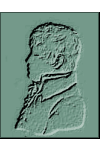
Until his attempted assassination of Napoleon I, Friedrich Staps (or Stapß) was an unremarkable young man. Born on March 14, 1792, in Naumburg (Saxony), the son of a pastor, he worked as an apprentice in a trading house in Erfurt. He led a quiet life there, spending his evenings reading Friedrich Schiller and his Sundays strolling with a friend.
However, on September 25, 1809, he wrote to his parents: I am leaving to carry out what God has commanded me to accomplish
; and he left Erfurt for Vienna. On October 4, he was in the Austrian capital; there he acquired a kitchen knife and then went to Schönbrunn.
He had a plan: to approach Napoleon under the pretext of handing him a petition and then kill him with a knife. As it happened, the Emperor was attending a parade that day. This would be the opportunity.
Unfortunately for Staps, he arrived too late. But he didn't give up. Another parade was scheduled for eight days later: he waited.
On October 13, 1809 (the 12th according to Jean Tulard), he arrived on time. Napoleon observed the procession between marshal Michel Ney and general Jean Rapp. Staps stepped forward, playing his role as petitioner. Marshal Alexandre Berthier, also present, asked the young man to hand over his paper, but Staps insisted on speaking to Napoleon. Rapp then approached in turn; the young German's gaze and determined air aroused his suspicions, and he had him discreetly arrested by a gendarmerie officer.
Staps was taken to the castle and searched. A knife and the portrait of a young girl were found on him. He readily confessed his plan but refused to reveal the reason to anyone other than the Emperor himself.
He then had him brought into his study. Rapp, who was present, recounted the scene in his Memoirs. He was calm; Napoleon's presence made no impression on him whatsoever. He did, however, greet him politely. Napoleon asked him if he spoke French. Staps replied fluently: Very little
Rapp therefore served as interpreter during the ensuing interrogation.
Napoleon – What did you want to do with your knife?Staps – Kill you.
Napoleon – You are mad, young man; you are delusional.
Staps – I'm not crazy, I don't know what enlightened is.
Napoleon – So you are ill?
Staps – I am not sick, I am doing well.
Napoleon – Why do you want to kill me?
Staps – Because you are bringing misfortune upon my country.
Napoleon – Have I done you any harm?
Staps – as you did to all Germans.
Napoleon – Who sent you? Who drove you to this crime?
Staps – Nobody. What made me take up arms was the firm conviction that by killing you I would render the greatest service to my country and to Europe.
Napoleon summoned his doctor, Jean-Nicolas Corvisart des Marets, who assured him that Staps was in good health and not mad. The dialogue resumed.
Napoleon – You are overzealous; you will be the downfall of your family. I will grant you your life if you ask forgiveness for the crime you intended to commit and for which you should be angry.Staps – I don't want forgiveness. I feel the deepest regret for not having succeeded.
Napoleon – Good heavens! It seems that a crime means nothing to you!
Staps – Killing you is not a crime, it's a duty.
Napoleon – What is this portrait that was found of you?
Staps – That of a young person I love.
Napoleon – She will be distressed by your affair.
Staps - She will be distressed by my failure; she abhors you as much as I do.
Napoleon – But, in the end, if I grant you mercy, will you be grateful?
Staps – I will kill you no less.
The conversation ended there.
That evening, Napoleon wrote to Joseph Fouché to recount the event and expressed his desire to prevent it from gaining prominence, if necessary by portraying the young murderer as insane. He was nonetheless deeply affected by this episode, which made him realize the intensity of the hatred felt by the Germans.
The young man, who refused all food, was tried on October 15, 1809, by a military court. On the 17th, Friedrich Staps was executed by firing squad. He died shouting: Long live liberty! Long live Germany! Death to its tyrant!
It is possible that this assassination attempt hastened Napoleon and Josephine's divorce. The Emperor may have realized, on this occasion, the fragility of his regime in the absence of an heir. As Jean Tulard put it: Staps's dagger missed Napoleon. It would have killed Josephine
.