Jean-Baptiste Girard
Duke of Ligny, Great-Officer of the Legion of honour
Pronunciation:

Jean-Baptiste Girard was born in Aups, Provence (now the Var department), on February 21, 1775.
Enlisted in September 1793, he served in the Army of Italy in 1794, rising rapidly through the ranks: second lieutenant in 1796, lieutenant in 1797, captain in November of the same year. Wounded at the Battle of Brenta, he was appointed battalion commander by General Jean-Etienne Championnet, then adjutant general and brigade commander by General Jean-Charles Monnier.
Girard became brigade commander at Marengo in June 1800, then brigade general in November 1806, after Jena.
In 1807, he took part in the Polish campaign. In 1808, he was made a Baron of the Empire.
Employed in 1809 in the 5th corps of the Spanish army, he distinguished himself at the battle of Pont de l'Arzobispo, then at the battle of Ocaña, on November 19, 1809, where, wounded, he was cited in Marshal Adolphe Edouard Mortier's report.
A division general at the end of 1809, Girard continued to serve in the peninsula, distinguishing himself in particular at the siege of Badajoz on February 7, 1811, where his conduct earned him, at Marshal Jean-de-Dieu Soult's suggestion, the plaque of Grand Officer of the Legion of Honor.
Employed with the Grande Armée in 1812, he was wounded on the Berezina. The following year, he was hit by several bullets at the battle of Lützen on May 2, 1813, then at Liebnitz on August 27, 1813. Taken prisoner of war, he returned to France in 1814 and was placed on half-pay.
On the Emperor's return from Elba, Girard immediately rallied, and was made a Peer of France on June 2, 1815.
Commanding the 7th Infantry Division during the campaign in Belgium, he was seriously wounded by a bullet to the chest during the battle of Ligny on June 16, 1815. That same evening, the Emperor came to visit him and conferred on him the title of Duke of Ligny.
On the evening of Waterloo, he was evacuated to Paris, where he died of his wounds on June 27.
Napoleon I held Jean-Baptiste Girard in the highest esteem; here's how he described him on St. Helena: He was one of the most intrepid soldiers in the French army: he obviously had the sacred fire
.
"Jean-Baptiste Girard, Duke of Ligny". Color drawing of the nineteenth century.

Girard's name is inscribed on the 8th column (north pillar) of the Étoile triumphal arch, and in the Salle des Batailles at Versailles.
Other portraits
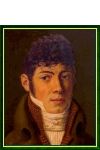

"General Girard". French school of the nineteenth century.