Joseph Fesch
Archbishop of Lyon and Primate of Gaules from 1802 to 1836
Pronunciation:
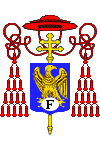
Joseph Fesch was born in Ajaccio on January 3, 1763, the son of François Fesch, a Swiss officer in Genoa's service, and Angèle-Marie Pietra-Santa, widow of Ramolino.
From the first marriage, his mother had a daughter, Letizia Ramolino, who was to become Napoleon's mother, making Joseph Fesch the Emperor's uncle.
He entered the orders shortly before the Revolution, but was forced to leave the soutane during the Terror.
In 1795, his nephew Napoleon Bonaparte entrusted him with the position of procurement clerk for the Italian army. It was during this campaign that he began what would become one of the finest collections of paintings in France.
He took up the cassock again in 1800, and two years later became Archbishop of Lyon and Primate of the Gauls, with the help of his nephew, the First Consul. On January 17, 1803, he was named cardinal by Pope Pius VII.
The following years saw him in the delicate position of combining loyalty to the Holy Father with loyalty to Napoleon I...
After the battle of Waterloo, he moved with his half-sister Letizia to Rome, where he devoted himself to pious activities and cultivated his passion for art, adding to his collection, which grew to almost sixteen thousand paintings.
Cardinal Fesch returned to God in the Eternal City on May 13, 1839.
"Cardinal Joseph Fesch" by Jules Pasqualini (Gavignano 1820 - La Porta 1886).

His hometown, to which the cardinal bequeathed over a thousand paintings, built a museum bearing his name, which was inaugurated in 1852. A bronze statue of the cardinal stands in its courtyard.
Address
68, Rue de la Chaussée d'Antin. Paris 9th arrondissement
Hôtel de Montfermeil, purchased on March 16, 1800 by Cardinal Fesch who came to live there in 1807.Other portraits
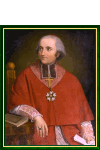

"Joseph Fesch". Nineteenth century French school.
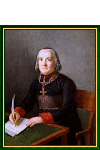
"Cardinal Joseph Fesch" painted 1807 by Antoine-Claude Fleury (? - 1822).
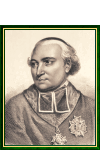
"Cardinal Fesch". Nineteenth century engraving.
Authors

Didier Grau
Lionel A. Bouchon
This page was written by Didier Grau, Doctor of Medicine, 13008 Marseille, France and Lionel A. Bouchon, Pharmacist, IT specialist. 74540 Gruffy. France. The two of them founded the Napoléon et Empire website in 2008 and have run it together ever since. Their research focuses in particular on the precise location of Napoleonic sites of memory.
About this page
Published on: September 18th, 2013
Reading time: Between 1 and 2 minutes.
Last modified on: October 19th, 2025
Word count: 305
Number of images: 1