Emmerich Joseph de Dalberg
Duke of the Empire
Pronunciation:
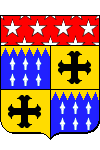
Emmerich-Joseph-Wolfgang-Héribert de Dalberg was born on May 30, 1773 in Mainz, Rhineland-Palatinate. Born into one of the oldest families in Baden, he was the nephew of Karl Theodor Anton Maria von Dalberg, Prince Primate of the Catholic Church in Germany.
After studying in Göttingen, he moved to Vienna and embarked on a political and diplomatic career. From 1800 to 1803, he served in Mannheim as advisor to the Bavarian Supreme Administrative College, over which his father presided. In 1803, he was Minister Plenipotentiary to the Grand Duke of Baden, and Ambassador to the French Court.
After Baden joined the Rhineland Confederation, Dalberg entered the service of Napoleon I, and was highly esteemed by Charles-Maurice de Talleyrand-Périgord, in charge of the Empire's foreign relations.
Naturalized as a French citizen, he took part in the negotiations leading to Napoleon I's marriage to Marie-Louise of Austria in 1809, following the Treaty of Schönbrunn. His services were rewarded with the title of Duke on April 14, 1810.
After the fall of Napoleon, he accompanied Talleyrand to the Congress of Vienna as plenipotentiary, before receiving the peerage and embassy of Turin from King Louis XVIII.
He spent the last years of his life retired on his land at Herrnsheim near Worms, where he died on April 27, 1833.
"Duke Emmerich Joseph de Dalberg". Nineteenth century engraving.
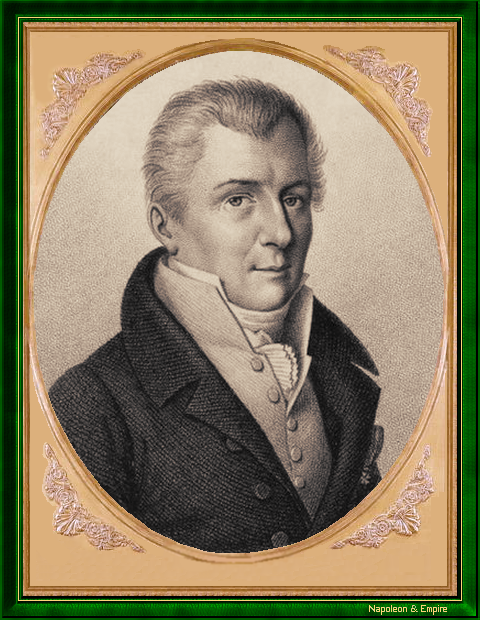
Emmerich Joseph de Dalberg was a passionate collector of 16th-, 17th- and 18th-century French drawings; his collection can be seen today at the Hessisches Landesmuseum in Darmstadt.
Address
7, Rue de la Concorde. Paris 8th arrondissement
The Imperial Almanach of 1811 indicates that Duke Dalberg lives at this address (now 7, Rue Royale).Other portraits

Authors


Didier Grau
Lionel A. Bouchon
This page was written by Didier Grau, Doctor of Medicine, 13008 Marseille, France and Lionel A. Bouchon, Pharmacist, IT specialist. 74540 Gruffy. France. The two of them founded the Napoléon et Empire website in 2008 and have run it together ever since. Their research focuses in particular on the precise location of Napoleonic sites of memory.
About this page
Published on: September 18th, 2013
Reading time: Between 1 and 2 minutes.
Last modified on: October 9th, 2025
Word count: 276
Number of images: 1