John Baptist Joseph Fabian Sebastian of Austria
Archduke of Austria, count of Merano
Pronunciation:
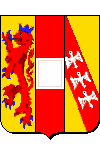
John Baptist Joseph Fabian Sebastian of Austria was born in Florence , in Tuscany on January 20, 1782. His father was the future Holy Roman Emperor Leopold II (1747-1792). Among his many brothers, two would play a leading role during the Napoleonic era. The eldest would reign over the Holy Roman Empire as Francis II and then over Austria as Francis I. Charles Louis, better known as Archduke Charles, would command the Austrian armies during the French Revolutionary and Napoleonic Wars.
Archduke John's military career began early, as he commanded a dragoon regiment as early as 1795. The last months of 1800 saw him at the head of the Imperial Army. Jean-Victor Marie Moreau inflicted him a defeat at Hohenlinden, which brought an end to the Second Coalition.
In the following years, Archduke John served as Director General of Engineering and Fortifications and then as Director of the Theresian Military Academy.
His participation in the operations of the Third Coalition was modest. He commanded a corps in Tyrol and then went to Italy where he succeeded his brother Charles at the head of the army.
In 1808, he encouraged Tyrol to establish a militia, which soon after actively participated in Andreas Hofer's rebellion against the Franco-Bavarian occupation of the province.
The following year, Archduke John received command of the Army of Inner Austria, a region encompassing the southernmost possessions of the Austrian Habsburgs. In this position, he fought in Italy against prince Eugène de Beauharnais, defeating him at the battle of Sacile (April 16, 1809) and then at Caldiero (April 27-30) before being defeated at the battle of the Piave (May 8). Forced onto the defensive, he fled to Hungary where he was again defeated at Raab (June 14). This setback prevented him from joining the rest of the army before the battle of Wagram, much to the chagrin of his brother Charles, who held him responsible for the delay.
For all these feats of arms, Archduke John was promoted to Grand Cross of the Military Order of Maria Theresa, but lost his command to Prince John of Liechtenstein.
His military career then consisted of the siege of the fortress of Huningue, held by General Joseph Barbanègre, who only surrendered the city on August 26, 1815, more than two months after Napoleon's second abdication .
Agriculture, technology, mountaineering, and hunting subsequently became his new interests. He cultivated an image as a modernizer and founded numerous institutions in diverse fields such as education, finance, agriculture, insurance, and industry. In 1829, Archduke John entered into a morganatic marriage with Maria Anna Pilz, the daughter of a postmaster, which resulted in his exclusion from the line of succession to the Austrian throne.
During the revolutions that shook Europe in 1848, his reputation as a liberal and supporter of German unity led the short-lived Frankfurt parliament to elect him regent of the newly created and very provisional German Empire, an aborted attempt at German unification, which ended in 1849.
A year later, he became the first mayor of the city of Stainz, in Styria, and held this position until 1858.
He died in Graz in 1859 and was buried in Schenna, near Merano, in what is now the Trentino-Alto Adige region.
"Archduke John of Austria, count of Merano". Nineteenth century anonymous painting.

Archduke John is the great-grandfather of the famous conductor Nikolaus Harnoncourt (1929-2016)